Costs & admin · Movesmith guide
Change of address checklist: who to tell when you move house
When you move, no one updates your address for you. Tell both councils, your bank, employer, DVLA, HMRC, GP, utilities and insurers — and set up a Royal Mail redirect as a safety net. Here's the full list, grouped and in order.
Last reviewed July 2026 · 6 min read
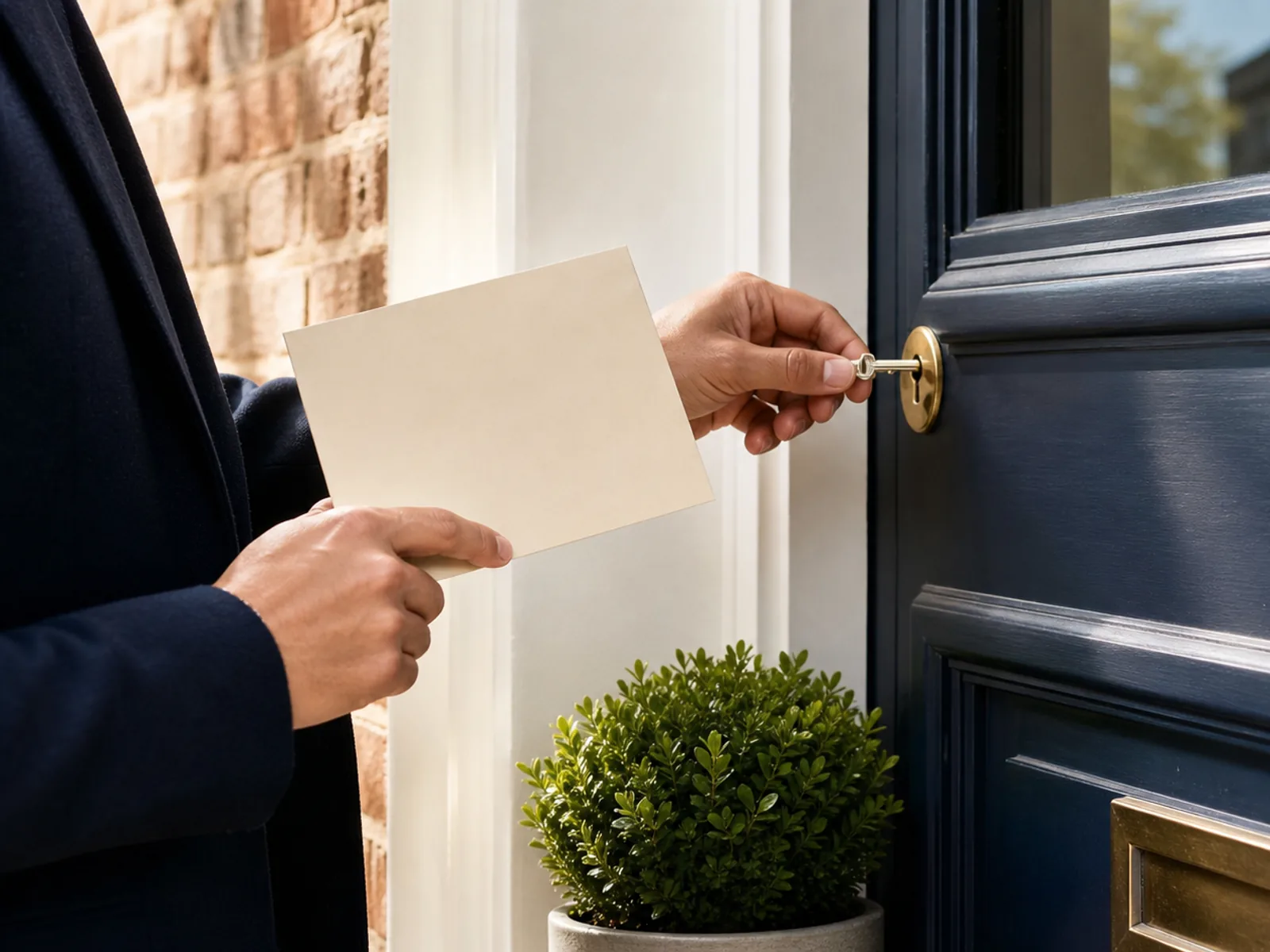
Updating your address is the admin job that's easy to half-do and regret. Miss the DVLA and you risk a fine; miss your insurer and a claim can be refused; miss the council and you can end up chasing a refund. The good news: it's a one-off afternoon if you work from a list. This is that list — who to tell, when, and how.
The short version
- No one does this for you — your solicitor, letting agent and old providers don't share your new address around.
- Start about two weeks before the move for anything with a notice period, and finish the rest in the first week after.
- The legally important ones: DVLA (driving licence and V5C), your insurers, your bank, HMRC and the electoral roll.
- Set up a Royal Mail redirect to catch anything you forget — it buys you time, it isn't a substitute for updating providers.
- Tell both councils about council tax — they don't talk to each other. See our dedicated council tax guide for the detail.
Who to tell when you move house
Work through these groups. Most can be done online in a few minutes each once you have your move date and new address confirmed.
Government and official
- Both local councils — the one you're leaving and the one you're moving to (council tax, electoral roll, any benefits).
- DVLA — update your driving licence and vehicle logbook (V5C); both are free and you can be fined for not doing it.
- HMRC — so tax, National Insurance and any tax credits or Child Benefit reach the right place.
- The electoral roll — register to vote at your new address.
- TV Licence — update or transfer your licence to the new home.
Money and insurance
- Bank, building society and credit-card providers.
- Home, contents, car and life insurers — an out-of-date address can invalidate cover.
- Pension providers, ISA and investment platforms.
- Any loans, car finance or Buy Now Pay Later accounts.
Health, work and household
- GP and dentist — register with a new practice if you're moving out of area.
- Your employer (payroll and HR) and, if you have children, their school or nursery.
- Utilities and broadband — see the timing note below.
- Subscriptions and deliveries — anything that posts you goods or bills.
When to update each one
| When | What to do |
|---|---|
| 2–4 weeks before | Anything with a notice period: broadband transfer, utility switches, redirect setup. |
| 1 week before | Book meter reading reminders; confirm the new council tax account. |
| Moving day | Take meter readings at both properties; note them with dates and photos. |
| First week after | Bank, DVLA, HMRC, insurers, GP, employer, subscriptions, electoral roll. |
If you only have time for a handful before the move, prioritise the redirect, your broadband transfer and the two councils — the rest can safely follow in the days after.
Setting up a Royal Mail redirect
A Royal Mail redirect forwards post from your old address to your new one for 3, 6 or 12 months. It's a paid service and worth it as a safety net — it catches the providers you forgot and the ones who take a while to update.
- Apply online or at a Post Office, ideally at least five working days before you move.
- You'll need ID and proof of the move; you can redirect for one person or a whole household.
- Treat it as a backstop, not a fix — still update providers directly, or your post just moves the problem down the line.
Council tax — tell both councils
Council tax is the one people most often get wrong, because you have to notify two councils and they don't share the information. You'll get a closing bill (or refund) from the old council and a fresh account at the new one.
Go deeper
Our council tax when moving house guide covers exactly who to tell, when, whether you'll pay on two homes during an overlap, and the discounts and refunds most people miss.
What happens if you forget one
- DVLA: driving on a licence or V5C with the wrong address can lead to a fine of up to £1,000.
- Insurance: an out-of-date address can mean a claim is reduced or refused.
- Council tax: you can end up billed at the wrong property, then chasing a refund.
- Missed post: cards, fines, court letters and renewal notices don't wait — a redirect buys time, but only updating providers fixes it.
Planning your move? See your booking options.
Movesmith plans home moves across the UK. Enter your belongings, route and access details for a fixed quote. Supported moves price online; moves needing further planning receive a tailored review. We check suitable moving-team availability before booking.
Get a fixed-price quote