Types of move · Movesmith guide
Flat removals: parking, stairs, lifts and access details to check
Walk the full route from each room to the lawful loading point and check the same access details at the destination.
Last reviewed August 2026 · 6 min read
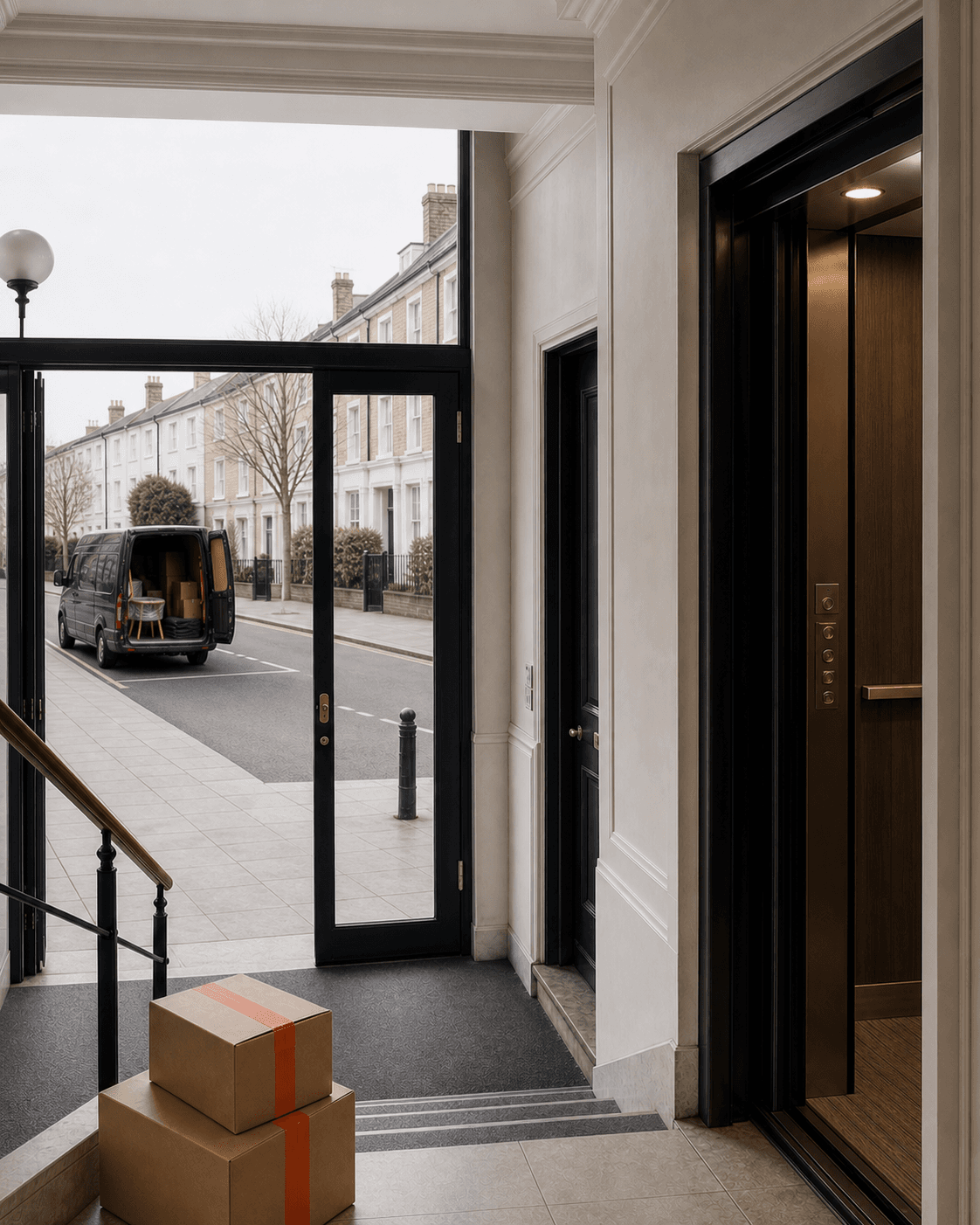
For a flat move, the route does not start at the postcode. It starts inside the property and continues through doors, corridors, stairs or lifts to the place where the van can stop. Planning that route at both addresses helps the moving team understand the work and reduces avoidable delays.
The short version
- Walk the route from the room to the lawful loading point at both addresses.
- Ask the building manager about lift, bay, entrance and timing rules.
- Check that the lift is working, suitable and available during the move.
- Establish who must arrange any permit, pass or loading-bay booking.
- Share carrying distance, stairs, tight turns, keys and access contacts.
1. Walk the route from room to road
- Through the room and front door
- Along corridors or communal areas
- Down stairs or in the lift
- Through the main entrance
- Across the pavement or courtyard
- To the lawful loading point
Look for narrow doorways, tight turns, low ceilings, steps and long carrying distances. Repeat the same check at the destination.
2. Speak to the building manager or concierge
Some buildings require advance notice for a move. Ask whether you need to:
- Reserve a service lift or loading bay
- Use a particular entrance
- Protect floors or lift walls
- Avoid certain hours
- Provide the vehicle registration
- Collect keys or an access fob
Record the booking window and the contact person for the day.
3. Check the lift properly
‘There is a lift’ is only the first question. Check that it is working, large enough for the main items and available during the move.
If the lift must be reserved, confirm the booking in writing. If it cannot carry furniture or is unavailable, tell Movesmith before the day so the stairs and carrying route can be reviewed.
4. Plan lawful parking and loading
Do not assume a van can wait outside the entrance. Check the street restrictions, controlled hours, permit requirements and loading-bay rules.
Where a permit, visitor pass or bay booking is required, establish who must arrange it and complete the process early. If you are unsure, share that uncertainty before the move rather than guessing.
Load safely and lawfully
Never ask a driver to block a pavement, entrance, cycle lane or unsafe section of road.
5. Measure the carrying distance
A flat may be on the ground floor but still involve a long route through a courtyard or development. Estimate the distance from the building entrance to the lawful loading point.
Mention steps, slopes, cobbles, gravel, narrow paths or doors that do not stay open. These details explain the handling route better than the floor number alone.
6. Prepare keys, gates and contact points
- The right keys and fobs, kept with the person giving access
- The concierge or building contact details
- Access to the destination at the agreed time
- A plan if the lift or bay is unexpectedly unavailable
If another person will provide access, confirm that they know the timing and can be reached. Do not enter gate codes, passwords or access credentials in the booking or an incident report; keep them with the authorised person who will meet the operator.
7. Check both addresses
Customers often explain the property they are leaving in detail and provide only a postcode for the destination. That leaves half the route unknown. Treat pickup and delivery as two separate access checks.
Flat-move access checklist
- Floor and lift availability at both ends
- Stairs, tight turns and doorway widths
- Carrying distance to the loading point
- Parking, permits and bay bookings
- Building rules and permitted hours
- Keys, fobs and an authorised access contact (credentials kept out of the Platform)
- What happens if planned access is unavailable
Planning your move? See your booking options.
Movesmith plans home moves across the UK. Enter your belongings, route and access details for a fixed quote. Supported moves price online; moves needing further planning receive a tailored review. We check suitable moving-team availability before booking.
Get a fixed-price quote