Moving essentials · Movesmith guide
How to Pack for a House Move: A Practical UK Checklist
Pack in a useful order, protect your belongings and keep first-night essentials easy to reach.
Last reviewed October 2026 · 11 min read
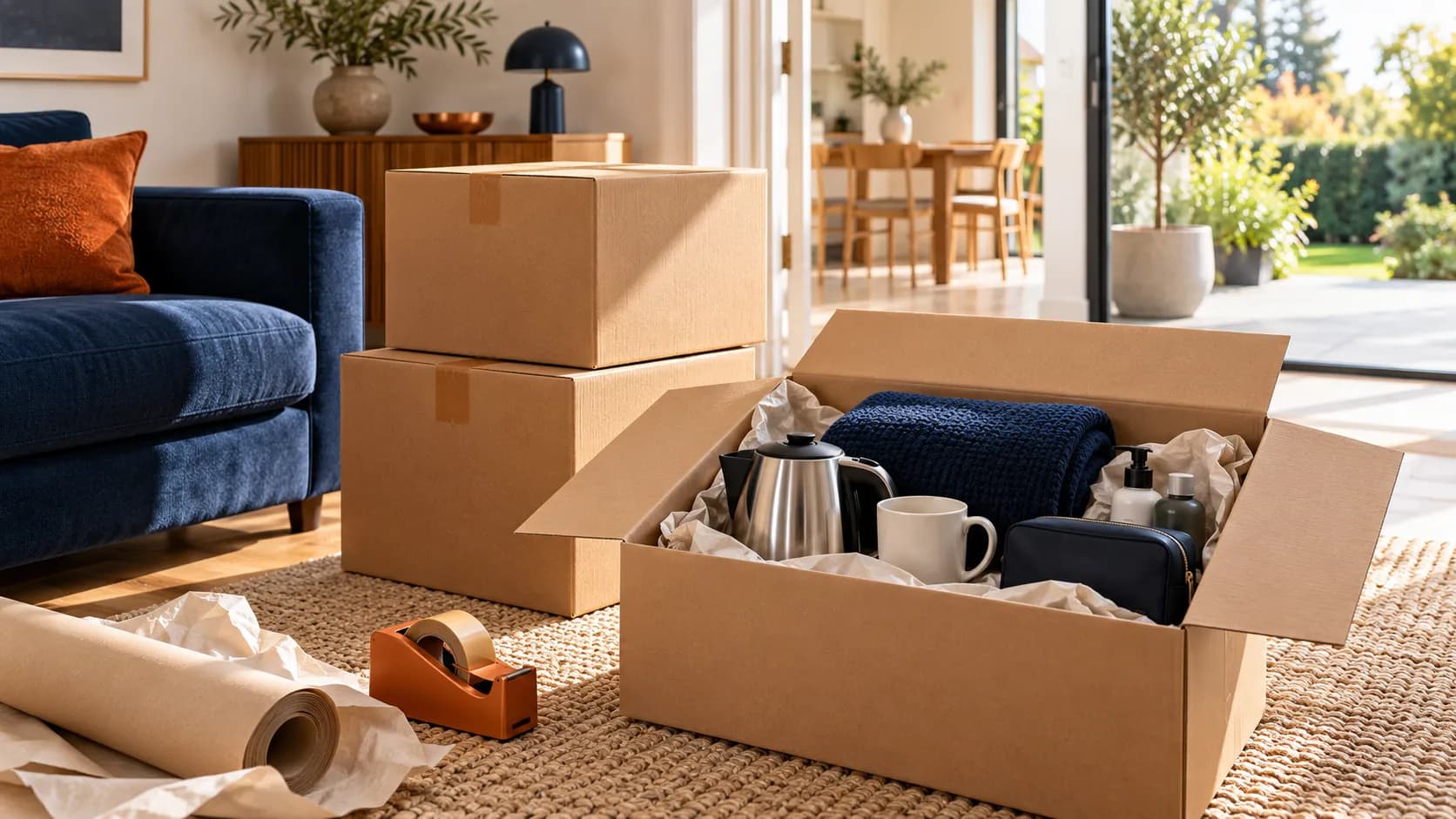
Start packing with a simple question: what can you live without until moving day? Work through those belongings first, leaving a small set of everyday essentials accessible. A useful packing plan makes boxes easier to handle and helps you find what you need after arrival.
The short version
- Begin with books, decorations, spare bedding and seasonal belongings you will not need before the move.
- Kettle, mugs and a small set of food and drink supplies.
- Boxes are secure and labelled by room and contents.
Start with a packing plan that reflects your actual home
There is no reliable universal box count for a one-bedroom or three-bedroom home. Books, hobbies, kitchen equipment and storage spaces can make two similar properties very different packing jobs. Start with a room-by-room list, including cupboards, loft areas, outdoor storage and belongings kept elsewhere.
Give each item one of four decisions: move, use before moving, pass on, or deal with separately. Arrange any donation, sale or disposal independently; do not assume it is included in a removal booking. Keep the working inventory current as those decisions change so the transport request still describes what will actually go.
Choose a place to keep finished boxes without blocking normal access. Leave room to open doors and use the route through the property. A perfectly labelled stack is not helpful if it traps the sofa behind it.
When should you start packing for a house move?
Start with items you can do without once you know a move is likely, and keep the plan flexible while the date is uncertain. Estimate the work from your belongings and available help, not from somebody else's moving timetable. Fragile collections and packed storage areas usually require more decisions than an almost-empty guest room.
| Planning stage | Useful packing work | Keep accessible |
|---|---|---|
| Date still being arranged | Sort belongings, source suitable materials and pack rarely used items | Documents and things you might need if the move is delayed |
| Date confirmed | Work through rooms and update the inventory | Everyday cooking, work and washing essentials |
| Final days | Pack most remaining belongings and prepare labelled first-night supplies | Keys, medication, valuables and a small daily-use kit |
| Moving morning | Close the last boxes and check the agreed load | Your personal bag, contacts and access instructions |
This is a sequence, not a prescribed number of days. If you have limited time or need help, discuss packing services before the move rather than relying on an unfinished packing job being accommodated on arrival.
Sort before you fill the first box
Work through one area at a time. Separate what is moving from what you are selling, donating or keeping elsewhere. Update your moving inventory as you go, including the number of boxes and any bulky or fragile items.
Do not pack items for disposal into the moving load by mistake. Make separate arrangements for anything that is not travelling to the destination. If your inventory changes after booking, tell Movesmith so the job can be reviewed.
Choose materials that suit the contents
Use sound boxes, suitable packing paper, protective wrapping and strong packing tape. Replace boxes that are damp, torn or unable to hold their contents securely. Use smaller boxes for dense items such as books, and avoid making a large box too heavy to handle comfortably.
Protect fragile items individually and cushion them so they cannot knock against each other. Fill spare space with suitable material without forcing the box shut. Close and secure the base and top. Mark fragile contents clearly, but remember that a label does not replace suitable packing.
For delicate, unusually heavy or valuable belongings, ask the moving service what preparation is needed. Check its accepted-items guidance before including liquids, batteries, hazardous materials or other items that may need special arrangements.
Pack in an order that keeps the home usable
- Begin with books, decorations, spare bedding and seasonal belongings you will not need before the move.
- Move on to cupboards and rooms used less often.
- Keep a small working set of kitchenware, toiletries and clothes until the final days.
- Leave cleaning essentials accessible until you have finished using the property.
- Pack your first-night essentials separately and keep them easy to reach.
Avoid building stacks across doorways, stairs or exit routes. A clear carrying route matters as much as a tidy pile of boxes. Keep packed and unpacked belongings distinguishable so the final inventory remains understandable.
Label for the destination room
Write the destination room and a short description of the contents on each box. “Kitchen — mugs” is more useful at arrival than “miscellaneous”. Put the label where it remains visible when the box is stacked, and use a simple numbering system if you want to match boxes to your inventory.
For example, K1 might contain mugs and everyday plates, while K2 contains less-used cookware. Keep the list with you so you can find what you need without opening every box. Do not put sensitive personal details on the outside of boxes.
Prepare furniture and electronics
Photograph cable connections before disconnecting equipment and keep accessories together. Follow the manufacturer’s instructions for preparing appliances and delicate equipment. Keep small fixings in a secure labelled bag associated with the relevant furniture.
Check which items actually require dismantling to travel through the access route. Agree who will do the work and what reassembly is included. If you want professional packing or unpacking, confirm the rooms, items, materials and tasks covered before moving day.
Pack for your first evening
Think through arriving, making a drink, washing and going to bed. Keep these essentials accessible:
- Kettle, mugs and a small set of food and drink supplies.
- Chargers, toiletries and a change of clothes.
- Bedding and anything children or pets need immediately.
- The documents and contact details needed for the move.
Keep medication, keys, important documents and valuables with you, rather than placing them somewhere inaccessible in the moving load. Give your essentials box a clear label and tell the moving team which agreed items you need access to first.
Prepare for wet weather
Check the forecast close to the day. Keep packed boxes indoors until they are ready to move, make sure they are closed and sealed, and discuss protection for vulnerable belongings with the moving service.
Check that the entrance and carrying route are clear. Tell Movesmith about access changes or weather-related problems that could affect the plan. Avoid laying loose coverings where they create a slipping or tripping hazard. Additional packing or handling needs should be agreed rather than assumed.
Set up one packing station
Keep boxes, suitable wrapping, tape, labels and a marker together so you do not spend each session searching for them. Choose packaging designed for the contents and follow the supplier's assembly and loading instructions. Reject boxes with weakened seams, damp patches or damaged handles.
Build one box correctly, pack it, close it and label it before starting several more. Keep the contents stable with appropriate cushioning and avoid forcing the lid shut over protruding items. Dense contents belong in manageable loads; do not turn a large box into an unmanageable box of books.
Avoid putting adhesive directly onto delicate furniture finishes. Wrapping and protection should suit the surface and the journey. For unusually valuable, fragile or awkward belongings, ask for the appropriate packing approach to be assessed rather than improvising from ordinary household materials.
How to pack glasses, plates and kitchen belongings
Sort the kitchen into what you still need and what can be packed now. Empty and clean suitable containers, and allow them to dry. Set aside a small working set for the final days instead of repeatedly opening sealed boxes to find a mug or pan.
Protect fragile pieces individually and separate surfaces that could knock together. Use suitable cushioning and dividers where appropriate to the item and packaging system. Fill empty spaces so the contents do not shift, without compressing delicate handles or stems. Do not combine a heavy pan and exposed glassware in a way that lets one bear on the other.
Label the contents and destination clearly. Marking a box fragile is useful communication, but it does not compensate for inadequate packaging. If a set is particularly delicate or valuable, ask about professional packing and confirm the scope before the move. Pack permitted liquids securely and separately from items that would be damaged by a leak.
Clothing, books, mirrors and electronics need different approaches
Use clean, secure bags, suitcases or suitable boxes for clothing according to the agreed moving plan. Make bags distinguishable from rubbish or donations. Hanging clothes may suit wardrobe cartons where available; confirm any materials supplied rather than assuming they are part of the booking.
For books, divide the load into manageable boxes and protect edges from movement. For mirrors, framed pieces and screens, use packaging suited to the object and follow relevant manufacturer or specialist advice. A blanket alone is not a universal packing solution for every fragile item.
Photograph cable connections if useful, label cables and keep accessories together. Back up important data before moving equipment. For appliances, follow manufacturer preparation instructions and arrange any disconnection or reconnection with an appropriately qualified person where needed. Do not assume the moving crew provides plumbing, gas or electrical work.
Create a box register you will actually use
Give each box a short code and a destination room. Add enough detail to locate the contents without listing every object. Keep the register on your phone or another accessible record, and use the same room names at the new home.
| Box | Label on the box | Note in your register |
|---|---|---|
| K01 | Kitchen — mugs — fragile | Open early; set of everyday mugs |
| B02 | Bedroom — bedding | First-night sheets and pillowcases |
| W03 | Study — desk accessories | Cables and stationery; no essential documents |
These are illustrative labels, not a suggested full inventory. Keep valuables and sensitive paperwork with you rather than broadcasting their location on a box. If the property has several bedrooms, identify them consistently so the team does not have to guess which room “bedroom” means.
If you have to pack quickly, protect the decisions that matter
Prioritise the essentials bag, the accurate item list and adequate protection for fragile belongings. Work through a defined area at a time. Ask helpers to use the same labelling system and tell them what must stay out. Otherwise, an efficient helper may pack the keys, charger or paperwork you still need.
Do not save time by concealing unpacked loose items inside furniture or by overloading boxes. Ask the moving service whether drawers need emptying and what preparation is required for the specific pieces. If the remaining work is more than you can complete, raise it early and ask whether additional help can be assessed and arranged.
On arrival, set up essential sleeping, washing and eating items first. Use the labels to locate them instead of opening every box. Keep the packaging for any item you need to report a concern about and follow the relevant reporting process promptly.
The evening-before check
- Boxes are secure and labelled by room and contents.
- The inventory reflects what is actually moving.
- Furniture preparation matches the agreed services.
- Doorways, stairs and loading routes are clear.
- First-night essentials are accessible.
- Keys, medication, documents and valuables are with you.
- Any changed details have been reported through the booking or support route.
Prepare your move
Tell us what is moving, where it is going and the access at both addresses. Include any packing or dismantling you need.
Start your moving enquiry